



Educational model
A common understanding of how we learn
We believe that children and young people build knowledge through experience, relationships, exploration and discussion. Curiosity drives learning: asking questions, forming hypotheses, experimenting and making connections enables them to gradually understand the world.
This is why we use active, experiential and collaborative methods, selecting approaches and strategies tailored to the age, learning objectives and characteristics of children and young people. The variety of activities on offer recognises different ways of learning and makes the school experience more inclusive.
The Becoming model is developed within the framework of the Italian school system and the National Guidelines, bringing together pedagogical research, knowledge of child development, and educational and teaching practice. It provides a common framework, which each school interprets in the light of its own history, its own team and the context in which it operates.
A model that grows from 0 to 13 years old
Our approach to learning remains recognisable throughout the entire journey, but it evolves as children grow. Exploring, investigating, interpreting and reasoning are stages through which children and young people gradually become more aware and independent.
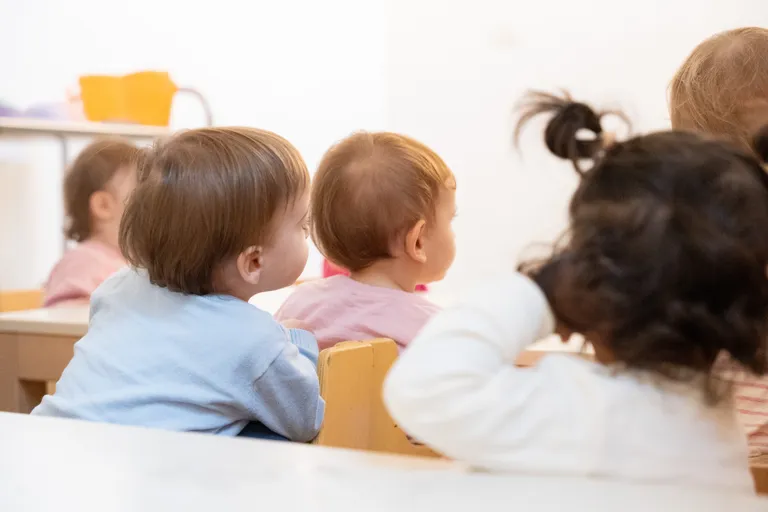
0–6 | Exploring and expressing oneself
In their early years, boys and girls discover the world through their bodies, their senses, play and relationships, using a variety of languages to explore, form hypotheses and express their thoughts. During these years, children ask questions and develop theories; this is when scientific thinking and the ability to reflect first emerge. The main task of teachers is to encourage children’s investigations, enabling them to find answers to the questions they ask themselves about life.
The Reggio Emilia Approach is an important pedagogical framework for us: it recognises children as capable and curious, and places value on different forms of expression, relationships, the environment, planning and documentation.
The Brazelton Touchpoints approach underpins the way we observe and understand development and the changes it undergoes. The metaphor of multiple intelligences has, over time, helped to reinforce the focus on the different ways in which each child expresses their abilities, interests and strengths.
Italian and English are naturally integrated into everyday life through relationships, play, routines and experiences, in different ways at each school and, in some cases, through ‘full English’ programmes.
6–11 | From curiosity to knowledge and a multidisciplinary approach
At primary school, children are first introduced to subjects that are divided into distinct areas of study, each leading to increasingly specific and complex knowledge. Our approach to teaching prioritises curricula that teachers develop together, through interdisciplinary work that promotes learning.
Children learn by gaining hands-on experience of practical tasks, through workshop-style activities that mirror the problems they encounter in everyday life. Encouraging them to carry out research and making them active participants in problem-solving and reflection is our approach to academic success.
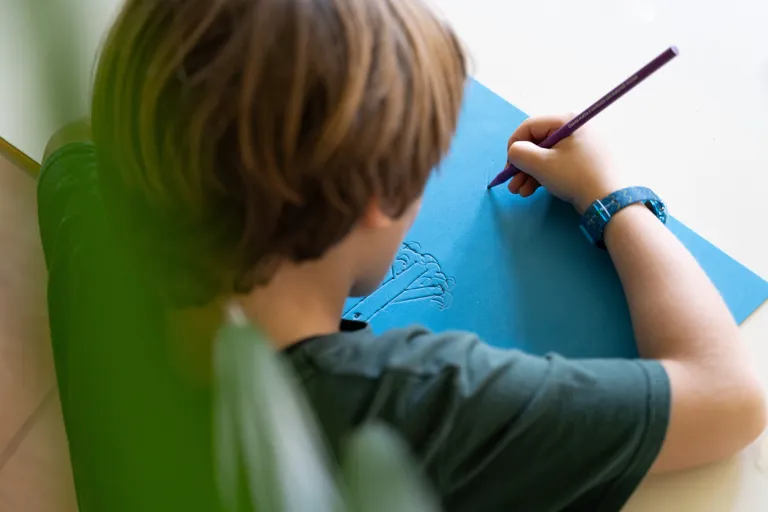
Inquiry, workshops, STEAM and interdisciplinary projects enable pupils to learn by doing and thinking, both individually and in collaboration with others. Knowledge is revisited and explored in greater depth over time, and pupils begin to recognise the strategies that help them learn.
Italian and English are both languages of instruction, with a 50/50 balance. English is used to study subjects, carry out research, collaborate and communicate what has been learnt.
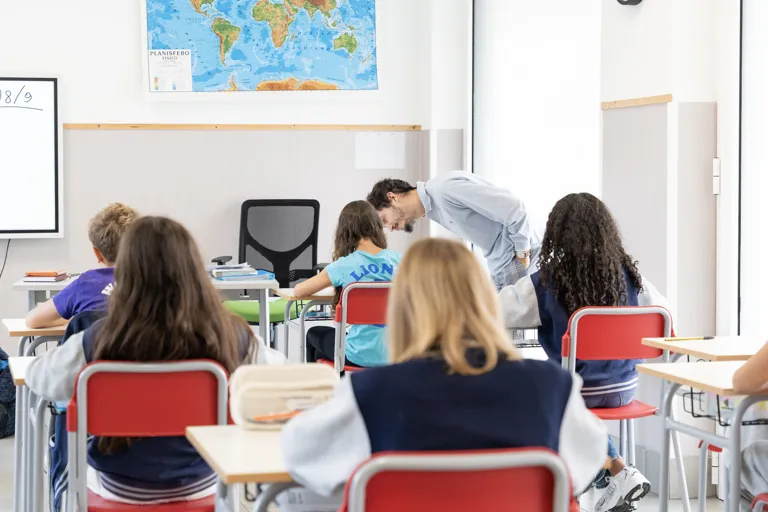
11–13 | Interpreting, arguing, becoming independent
In middle school, the analysis becomes more complex. Pupils learn to select and interpret information, compare sources and points of view, make connections between different subjects, and use what they know to tackle problems and support their arguments.
Research, interdisciplinary projects, debate, public speaking and collaborative work enable students to express and justify their own ideas, engage with others and take greater responsibility for their own learning.
A personal approach to study and work takes shape: pupils learn to organise themselves, identify the most effective strategies and apply their knowledge and skills with increasing independence. We also help them to recognise their interests, aptitudes and strengths, so that they can make more informed choices about their next steps.
Italian and English remain languages of instruction, with a 50/50 balance, not least to tackle increasingly complex subject content. The programme may also be extended to include other languages and promote multilingualism.
Adults who observe, plan and carry out research
Educators and teachers do more than simply convey content. They observe, design contexts and experiences, put forward ideas, pose questions and help children and young people to make sense of what they do and learn.
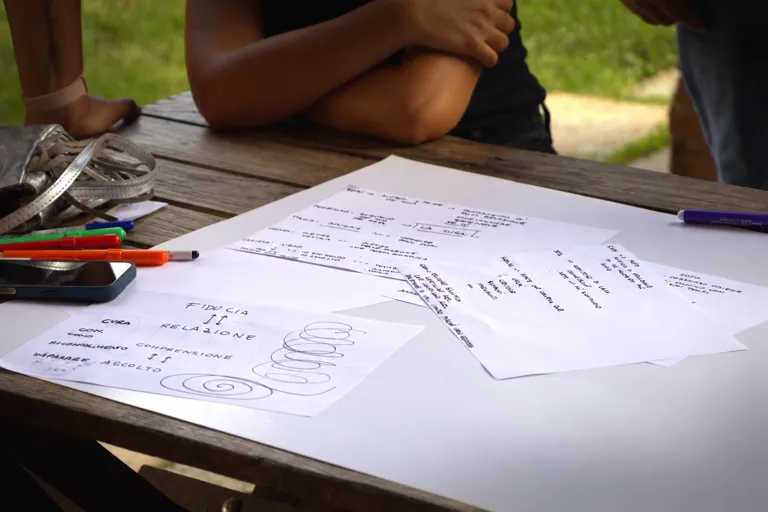
Observation and documentation help adults to reflect on learning processes and plan the next steps. As pupils progress, assessment takes into account not only the outcomes but also the starting point, the progress made and the journey undertaken, helping pupils to recognise their strengths and areas of difficulty.
Professional exchange, research and continuing professional development through Becoming Academy help educators and teachers to keep their skills up to date and improve their work.
Environments that educate
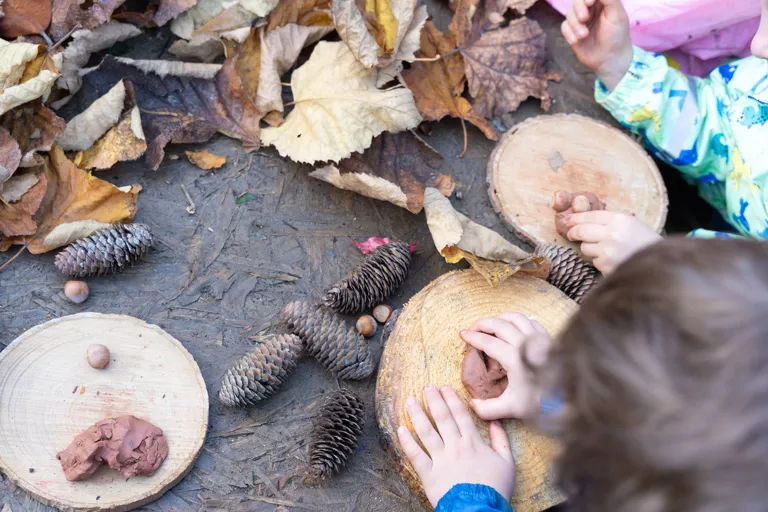
These spaces form part of the educational programme. In the early years, creative workshops, materials and forms of expression broaden the scope for exploration and self-expression; as children grow older, STEAM workshops and learning environments enable them to experiment, design and put their knowledge and ideas to the test.
Learning does not end at school. Through Outdoor Education, nature and the local area become places where pupils can observe, gain experience, deepen their knowledge and make connections between different subjects.
Learning also means growing
Learning, wellbeing and relationships are closely linked. Children and young people gradually learn to recognise their feelings, get on with others, deal with conflicts and difficulties, work together and take on responsibility.
This focus runs throughout the entire educational journey and, in primary and secondary schools, is also incorporated into a structured programme known as Social and Emotional Learning (SEL)
Schools and families have different roles, but they share the responsibility for creating the conditions that enable children and young people to grow, learn and thrive.
The same concept of learning, different ways of putting it into practice: so that children and young people grow up to be curious, self-aware and increasingly independent in their thinking, learning and decision-making.