



About us
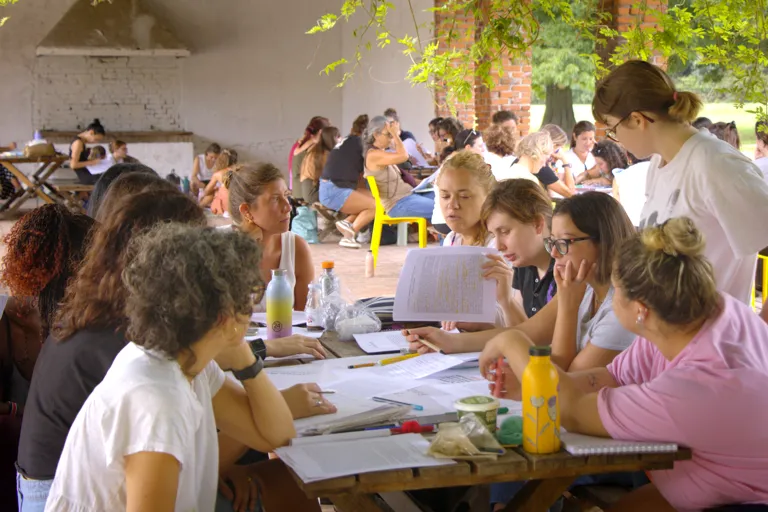
Becoming Education is a network of bilingual nurseries and schools for children aged 0 to 13, united by a shared educational vision and a distinctive approach to teaching. English is an integral part of daily life from the earliest years, within a programme that integrates the Italian school system with international educational approaches. Our approach draws on the Reggio Emilia Approach as one of its pedagogical foundations and emphasises experience, exploration, relationships and the various ways in which children and young people construct knowledge.
Becoming Education stems from the combination of pedagogical expertise, extensive experience in school management and a strategic vision focused on growth. It is from this combination that we build, day by day, a project that combines educational quality, organisational strength and the ability to evolve over time.
Growing up from 0 to 13 years old
The first thirteen years encompass fundamental changes in the development of children and young people. Each age brings with it different needs, possibilities and ways of learning.
As children grow up, the way they experience emotions and relationships and the role adults play in supporting them on this journey also change. It is an understanding of these changes that has given rise to our 0–13 project: a programme that ensures continuity in their development and recognises the unique characteristics of each age group.
This journey is underpinned by a shared educational framework, which takes on different forms as children and young people grow. The settings, experiences, level of independence and complexity of knowledge may change; what remains is an approach to learning based on curiosity, exploration, relationships and connections.
Our educational vision
Four key elements run throughout the entire educational journey and develop in line with the different age groups:
- Italian-English bilingualism, from the first to the final year
- Experiential learning: learning through experience, discussion and exploration
- Emotional and social development: getting to know oneself and others, expressing one’s thoughts, listening to different points of view
- Outdoor education: the school engages with the local area, and children and young people experience these places as part of their own world, learning to look after them
Underpinning all this is a set of shared values held by all Becoming Education schools:
- the wellbeing of children and young people
- recognition of each individual’s uniqueness
- the value of relationships and participation.
We believe in a school where children and young people are the protagonists of their own learning, participate actively and gradually take on responsibility.
One group, many identities
Every Becoming Education school has its own history; it is linked to the local area in which it is situated and to the community of children, families and professionals who are part of its daily life; it forms part of a shared project that seeks to make the most of the experiences of each community.
We share a vision and an educational approach, as well as skills and tools, whilst allowing each school the freedom to express its own identity and highlight what makes it unique. The Becoming Education project thus takes different forms in different contexts, within a common educational framework.
Families are at the heart of the educational community. Dialogue and discussion with them characterise our approach to schooling and help to build, monitor and improve the quality of the educational experience over time.
The power of a network
Being part of Becoming Education means being able to rely on the expertise, resources and tools developed at Group level and made available to all schools, together with the opportunities for discussion and exchange that arise within the network.
Pedagogical and teaching skills, knowledge of the Italian curriculum and of international approaches and programmes, research and professional development underpin the day-to-day work of schools. In every school, a qualified educational professional works alongside the educational and teaching teams, encouraging reflection on teaching practices and the quality of the programmes offered.
With Becoming Academy, continuing professional development is an integral part of our educational programme. Educators and teachers take part in ongoing training programmes, meetings, exchanges and visits to other schools in the network. In this way, experiences and skills are shared amongst the schools and become a shared resource.
All this is complemented by shared organisational and managerial skills. For us, educational quality and organisational quality are closely linked: a solid, well-organised school that is capable of evolving creates the conditions for a high-quality educational experience.
The people at the helm
Becoming Education is led by a diverse group of professionals, united by a shared vision of schooling. Their complementary skills and experience help to bring together the educational vision, the Group’s development and the quality of the schools.
- Chiara Laudanna – Chief Executive Officer
Leads Becoming Education, defining its strategic direction and development.
- Cinzia D’Alessandro – Founder, Head of Pedagogy and Head of Becoming Academy
Leads the Group’s pedagogical vision, as well as the research and development of the training programme for educators and teachers. - Letizia Giottoli – Chief Operating Officer
She oversees the Group’s organisation and operations, translating strategic objectives into processes and actions shared across the schools. - Giuliana D’Alessandro – Head of Human Resources
She is responsible for the Group’s strategic human resources planning and organisational development. - Emanuela Gallucci – Administrative Director
She coordinates administrative and financial management. - Alessia Pollini – Business Strategy Manager
She is responsible for the Group’s strategic planning.
Scientific Committee
The Scientific Committee, comprising university lecturers, supports Becoming Education in its research and reflection on educational issues and helps to develop the Group’s methodology.